
Start | End | Room 1 | Room 2 | Room 3 |
8:00 | 16:00 | Welcome Refreshments and Registration | Welcome Refreshments and Registration | |
9:00 | 11:00 | Tutorial 1 Recent Advances in Humanoid Robot Joint Modules: Electromechanical Design, Drive Systems, and Thermal Management | Tutorial 2 Model-Based Design for Electric Drives: From High-Fidelity Modeling to Embedded Deployment | Tutorial 3 Advanced Modelling, Control and Parameter Estimation for High-Speed PMSM Drives |
11:00 | 11:30 | Break | ||
11:30 | 12:30 | Tutorial 1 (continued) Recent Advances in Humanoid Robot Joint Modules: Electromechanical Design, Drive Systems, and Thermal Management | Tutorial 2 (continued) Model-Based Design for Electric Drives: From High-Fidelity Modeling to Embedded Deployment | Tutorial 3 (continued) Advanced Modelling, Control and Parameter Estimation for High-Speed PMSM Drives |
12:30 | 13:30 | Lunch | Lunch | |
13:30 | 15:30 | Tutorial 4 Encoderless Control of AC Drives: Concepts, Recent Developments, and Realistic Expectations | Tutorial 5 Power Electronics Converters for Open-winding Motor Drives | Tutorial 6 Theory, Topology and Design of Flux Modulation Permanent Magnet Machines |
15:30 | 16:00 | Break | ||
16:00 | 17:00 | Tutorial 4 (continued) Encoderless Control of AC Drives: Concepts, Recent Developments, and Realistic Expectations | Tutorial 5 (continued) Power Electronics Converters for Open-winding Motor Drives | Tutorial 6 (continued) Theory, Topology and Design of Flux Modulation Permanent Magnet Machines |
This tutorial presents recent advances in humanoid robot joint modules, focusing on the integrated design of high-performance permanent magnet machines, power electronic drive systems, and thermal management technologies. It addresses key challenges in achieving high torque density, compact integration, and long-term reliability under highly dynamic operating conditions in humanoid robotic applications. A unified multi-physics framework is adopted, emphasizing the coupling among electromagnetic design, power electronic excitation (including PWM effects), loss generation, and thermal behavior in compact actuators. The tutorial develops a closed-loop electro-thermal co-design framework, including electromagnetic loss modeling, thermal field analysis, cooling system design, temperature sensing and state estimation, and active thermal management control for joint modules. Some representative humanoid robot joint module cases are included to illustrate practical design trade-offs between electromagnetic performance, thermal limits, and control constraints in real actuator systems. System-level design methodologies are further discussed, together with practical insights from humanoid robotic platforms and emerging trends in integrated actuator architectures and high-performance drive technologies.
Humanoid robot joint modules have emerged as a critical enabling technology for next-generation robotics, requiring extreme levels of torque density, compact integration, and dynamic performance under highly constrained mechanical and thermal environments. The tight integration of permanent magnet machines, power electronic drive systems, transmission components, and thermal structures results in strong multi-domain coupling effects, where electromagnetic excitation, loss generation, heat transfer, and control dynamics are tightly interdependent.
This tutorial presents a comprehensive and systematic review of recent advances in humanoid robot joint module technologies from a unified electro-thermal co-design perspective. The tutorial first addresses the electromagnetic design of high-torque-density permanent magnet machines, including topology optimization for compact actuators, advanced winding and slot-pole configurations, and the impact of magnetic material properties under saturation and high-frequency excitation conditions. The influence of power electronic drive systems is further discussed, with emphasis on PWM switching strategies, harmonic current injection, and their effects on additional copper losses, core losses, and torque ripple in highly integrated actuator systems.
Building upon the electromagnetic foundation, the tutorial examines loss generation mechanisms and their implications for thermal behavior in compact joint modules. Thermal field modeling approaches are introduced together with advanced cooling strategies for compact actuator systems, including integrated conduction and convection heat paths, housing-based cooling structures, and the limitations of conventional cooling methods in highly confined electromechanical systems. Temperature sensing and state estimation techniques are also discussed to enable real-time reconstruction of internal thermal states that are otherwise difficult to measure directly in embedded actuator environments.
Finally, active thermal management and electro-thermal co-design methodologies are introduced, where electromagnetic loading, power electronic control strategies, and thermal regulation mechanisms are jointly optimized in a closed-loop framework. A representative humanoid robot joint actuator case study is presented to demonstrate the proposed methodology and to highlight practical trade-offs among torque density, thermal constraints, and control performance. This enables a unified design methodology for high-performance humanoid robot joint modules.
This tutorial provides a unified and application-oriented design framework bridging electromagnetic design, thermal behavior, and closed loop thermal control for next-generation humanoid robotic actuators.
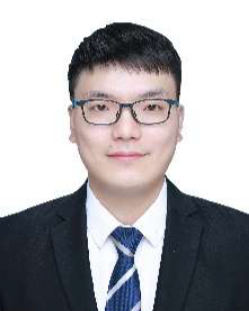
Tongji University
Tianran He received the B.Eng. degree from the Harbin Institute of Technology, Harbin, China, in 2014, and the M.Sc. and Ph.D. degrees from the University of Sheffield, Sheffield, U.K. in 2017 and 2021, respectively, all in electrical engineering. From 2014 to 2016, he was an Engineer with Shanghai Electric Wind PowerGroup Company Ltd., Shanghai, China. He is currently Assistant Professor with the School of Electronic and Information Engineering, Tongji University, Shanghai, China. His research interests include the design and analysis of high-speed permanent magnet motors and permanent magnet synchronous motors.
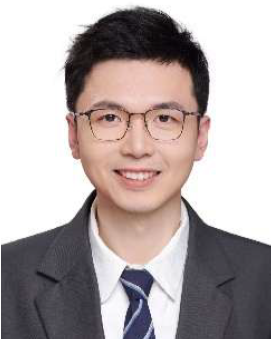
Harbin Institute Technology
Dawei Liang (M’22-SM’26) received the B.Eng. degree from Harbin Institute of Technology, Harbin, China, in 2014, the M.Sc. degree from Karlsruhe Institute of Technology, Karlsruhe, Germany, in 2018, and the Ph.D. degree from the University of Sheffield, Sheffield, UK., in 2022, all in electrical engineering. Currently, He is a full Professor in the Harbin Institute of Technology. His research interests include thermal modelling and management, condition monitoring, and multi-physical parameter identification of electrical machines and drives. Dr Liang has authored and co-authored more than 80 technical papers published in international conferences and journals, including 26 first or corresponding author publications in IEEE Transactions. Dr. Liang was invited to give tutorial in ISEEIE 2024 and CIEEC 2025 and served as the Guest Editor of IEEE Trans. Industry Applications, IET Electric Power Applications, Technical Program Track Chair the IEMDC 2025, member of the TPC of IEEE TCE 2023, IEEE ICITT 2024 and 2025, and was chair of special sessions of ICEM 2026, IEECSC 2025, CIEEC 2025, ICEMS 2026, 2022 and 2019.
Electric drive systems are central to modern electrification, from EV traction to industrial automation. Designing these systems to meet performance, efficiency, and reliability requirements demands a workflow that spans modeling, control design, real-time simulation, and embedded deployment. The individual disciplines have matured considerably, with notable advances in areas such as automated tuning and model fidelity management, but the integrated workflow incorporating these advances is rarely presented in an accessible, unified form. Researchers typically work within one domain, while industrial practice, where this integration happens routinely, remains largely undocumented.
This tutorial addresses that gap directly, presenting the complete model-based design workflow for electric drive systems: from motor modeling through automated controller tuning to model-based code generation and embedded deployment. Reduced-order modeling is covered as a dedicated topic, addressing the growing computational and estimation demands in drive system development, with concrete examples demonstrating how different techniques are applied across distinct problem settings. The tutorial concludes with an industrial use case that brings these methods together and takes them further, showcasing how a real-time FEM-derived motor model is used in practice for system-level efficiency optimization, Bayesian optimization-based safe controller tuning, and real-time FOC validation on hardware.
Demonstrations throughout use MATLAB and Simulink, grounding each concept in practical implementation.
The tutorial distinguishes itself through the following contributions:
Part 2: Control Tuning, Validation, and Embedded Deployment
Part 3: Applying the Workflow — Electric Drive System Development in Practice

Singapore Institute of Manufacturing Technologies of A*STAR
Dr. Jonathan Hey is a principal scientist at the Singapore Institute of Manufacturing Technologies of A*STAR and he leads the research on actuation and control in the adaptive robotics and mechatronics group. He holds a B.Eng. in mechanical engineering from Nanyang Technological University (2008) and a Ph.D. from Imperial College London (2014). His research focuses on optimal design, condition monitoring and control of electric machines, emphasizing multi-physics design optimization, sensor fusion and model-based compensation methods.

MathWorks
Swathy Pillai is a Senior Product Manager at MathWorks, specializing in Power Electronics Control workflows. Based in Bangalore, India, she holds a master’s degree in electrical engineering (Power Electronics & Drives). Before MathWorks, she spent over six years in R&D as an Embedded Controls Engineer at L&T Electrical & Automation and Schneider Electric India, developing control algorithms for industrial electrical drives and power converters.
High-speed permanent magnet synchronous motor (PMSM) drives are increasingly critical in electrified transportation, high-speed spindles, and aerospace applications due to high power-density and high efficiency. As the fundamental electrical frequency rises into the kilohertz range, the ratio of sampling frequency to fundamental frequency drops significantly. Conventional continuous-time design and proportional-integral (PI) tuning become inadequate due to severe cross-coupling, computation delays, and pulse-width-modulation (PWM) update delays. Simultaneously, accurate and fast parameter estimation including rotor position, machine electrical parameters, and internal temperatures is essential to fully exploit the drive’s capability, ensure functional safety, and enable condition monitoring. This tutorial provides a systematic and application-driven treatment of advanced modelling, control and estimation methods specifically tailored to the unique challenges of high-speed PMSMs. The primary objective is to equip researchers and practicing engineers with discrete-time modelling methodologies, robust predictive control schemes, and cutting-edge parameter estimation techniques that have been validated through extensive simulations, laboratory experiments, and real-world implementations.
The tutorial integrates three research frontiers with direct industrial relevance.
High-speed permanent magnet synchronous motor (PMSM) drives are essential for electric vehicles, high-speed spindles, and more-electric aircraft, yet their control is exceptionally challenging. Low sampling-to-frequency ratios, strong cross-coupling, and inverter delays cause conventional designs to lose stability and bandwidth. This tutorial delivers a complete, practice-driven solution: from exact discrete-time modelling and robust fast-dynamic predictive control to a unified parameter estimation framework covering sensorless operation, full electrical parameters, and deep-learning-based rotor temperature monitoring. Unique highlights include a powertrain-proven sensorless algorithm with functional safety, a physics-informed thermal neural network, and experimental insight into compensating inverter nonlinearity and harmonic distortion. Attendees will learn to design high-bandwidth, robust, and intelligent high-speed drive systems through a blend of theory, simulations, and real-world application case studies from both academia and industry.
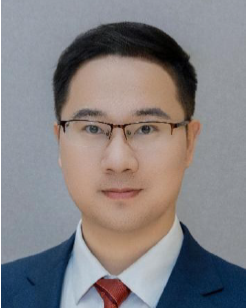
Southeast University
Shangjian Dai (Senior Member, IEEE) received the B.Eng. and M.Sc. degrees in electrical engineering from Nanjing University of Aeronautics and Astronautics, Nanjing, China, in 2013 and 2016, respectively, and the Ph.D. degree in electrical engineering from the University of Sheffield, Sheffield, U.K., in 2021. He was an e-drive engineer at Ford Motor China Research and Engineering Center, Nanjing, and later a Research Associate of power electronics at the University of Sheffield. Since 2022, he has been a Professor at the School of Electrical Engineering, Southeast University, Nanjing. His research interests include advanced control of electrical machine drives, wide-bandgap inverters, and high-reliability motor drives for electrified transportation and renewable energy.
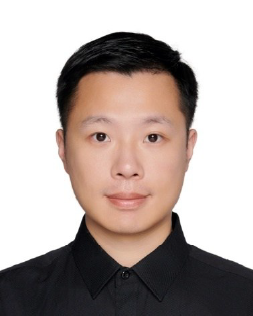
The Hong Kong Polytechnic University
Mingjin Hu received the B.Eng. and Ph.D. degrees in electrical engineering from Southeast University, Nanjing, China, in 2016 and 2023, respectively. He is currently a Postdoctoral Fellow with the Department of Electrical and Electronic Engineering, The Hong Kong Polytechnic University. He has published ten first-authored papers in leading IEEE Transactions, including IEEE Transactions on Power Electronics, IEEE Transactions on Industrial Electronics, and IEEE Transactions on Transportation Electrification. His research focuses on digital control of electric drives, discrete-time modelling and current control, multiphase machines, harmonic regulation and utilization, and thermal control of motor drive systems.
Chongqing Selis Phoenix Intelligent Innovation Technology Co., Ltd
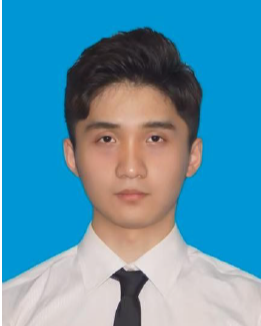
Yinfeng Hu received the B.Sc. degree in electrical engineering from Huazhong University of Science and Technology, Wuhan, China, in 2018, and the M.Sc. degree from Nanjing University of Aeronautics and Astronautics, Nanjing, China, in 2021. He received the Ph.D. degree from the School of Electrical Engineering, Southeast University, Nanjing, China. He is currently a Motor Control Software Engineer at Chongqing Selis Phoenix Intelligent Innovation Technology Co., Ltd., Seres Group, where he contributes to the introduction and development of innovative technologies. His research interests include advanced current control, sensorless drives, temperature estimation, parameter identification, multiphase motor fault diagnosis and fault tolerance, and AI edge computation in motor drives.
Southeast University
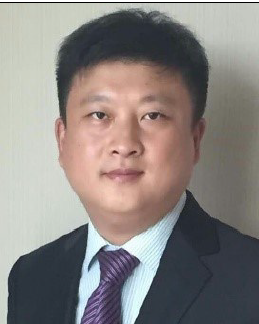
Wei Hua (Senior Member, IEEE) received the B.Sc. and Ph.D. degrees in electrical engineering from Southeast University, Nanjing, China, in 2001 and 2007, respectively. From 2004 to 2005, he was a jointly supervised Ph.D. student with the Department of Electronics and Electrical Engineering, The University of Sheffield, Sheffield, U.K. Since 2007, he has been with Southeast University, where he is currently a Chief Professor and the Dean of the School of Electrical Engineering. He has authored or co-authored more than 150 technical articles and holds 50 patents. His research interests include the design, analysis, and control of electrical machines, with a focus on permanent magnet brushless machines and switched reluctance machines.
This tutorial targets researchers and practitioners working on electrical machines and drive systems who seek a clear, practical, and up-to-date understanding of encoderless (position sensorless) control. The tutorial is organized around three contributions:
Beyond a standard survey, the tutorial provides a mechanism-based unification that explains which physical information is being exploited in each operating region and why no single approach typically delivers high quality full-speed-range performance. We connect classical methods to recently proposed solutions (e.g., active-flux and hybrid-flux observer frameworks and improved demodulation strategies) and then extend the discussion to predictive encoderless control—an emerging direction where prediction errors and finite-control-set switching sequences can be leveraged for position reconstruction.
Part 1 (Prof. Ralph Kennel)
Part 2 (Prof. Zhenbin Zhang)
Part 3 (all)
Shandong University
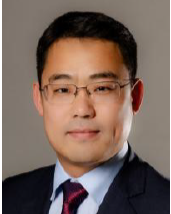
Zhenbin Zhang (Senior Member, IEEE) received the Ph.D. degree at the Institute for Electrical Drive Systems and Power Electronics (EAL), Technical University of Munich (TUM), Germany, with “summa cum laude”. From 2016 to 2017, he worked as a Research Fellow and the group-leader for “Modern Control Strategies for Electrical Drives” group in EAL. Since 2017, he has held the position of full professor and International Collaboration Ambassador of Shandong University, China. From 2018 to 2022, he was a guest professor in TUM with the “August- Wilhelm Scheer Professorship Award.” Prof. Zhang is an IET Fellow, IET Chartered Engineer, IEEE Senior Member, and World Top 2% Scientists released by Stanford University. He was awarded the “VDE-AWARD- 2017” for his contributions in advanced control for wind power generation and electrical drives. He was selected for the “1000-Talent” national program of China, and granted the Science Fund for Distinguished Young Scholars of Shandong Province, China. In addition, he won the First Prize of Science and Technology Award of China Electrotechnical Society, the Second Prize of both Shandong and Anhui Provincial Science and Technology Progress Award in 2023, 2022 and 2021, respectively, for his contributions in design and control of renewable energy and power conversion systems.

Technical University of Munich
Ralph Kennel (Senior Member, IEEE) received the Diploma and Dr.-Ing. (Ph.D.) degrees in electrical engineering from the University of Kaiserslautern, Kaiserslautern, in 1979 and 1984, respectively. From 1983 to 1999, he was with Robert Bosch GmbH, Gerlingen, Germany. Until 1997, he was responsible for the development of servo drives. From 1994 to 1999, he was a Visiting Professor with the University of Newcastle upon Tyne, Newcastle upon Tyne, U.K. From 1999 to 2008, he was a Professor of Electrical Machines and Drives with Wuppertal University, Wuppertal, Germany. From 2008 to 2021, he was a Professor of Electrical Drive Systems and Power Electronics with the Technical University of Munich, Munich, Germany. His main research interests include sensorless control of ac drives, predictive control of power electronics, and hardware-in-the-loop systems. Dr. Kennel is a Fellow of the Institution of Engineering and Technology and a Chartered Engineer in the U.K. Within IEEE, he is a Treasurer of the Germany Section.
This tutorial is based on the new book by the presenters under contract with Wiley-IEEE Press: “Power Electronics Converters for Open-Winding Motor Drives”, which will be published in the end of 2026. This tutorial will cover the main topics of open-winding motor drives.
This tutorial is with core novelty of Series-end Winding Motor Drives (SWMD) by the presenters, which can obtain nearly double speed range of motor with one extra phase-leg, and be able to integrated with multifunctions through zero-sequence current control.
This tutorial is with its uniqueness of introduction of open-winding architecture and control methods for active magnetic bearing (AMB) drives.
This tutorial is the very few presentations for this important topic.
This tutorial gives an introduction on the recent technology progress in the power electronics converters for open-winding motor drive. This topic is an important area for motion control in transportation and industry.
Compared with traditional three-phase AC motors with Y-connected windings, the open-winding structure has many potential advantages such as wide speed operation range, fast dynamic response, more control freedoms, and strong fault-tolerant capability. Therefore, the topology and control of power electronic converter for open-winding motor drive has important theoretical research value and engineering practice significance.
Three major types of open-winding motor are used as examples to study: reluctance motors, multiphase open-winding AC machines and active magnetic bearings (AMB). They share the similarity of open-winding structure, but are for different performance and targets. Systematic study of these kinds of open-winding motor drive has been done in recent years.
In this tutorial, the optimization progress of the open-winding reluctance motor drive is introduced step by step. Further, several novel technologies of multiphase open-winding AC motor drive are introduced. A novel kind of multiphase open-winding motor drive: series-winding motor drive (SWMD) is introduced, which is able to be applied in normal AC motor and increase the voltage utilization range significantly. Moreover, a Reconfigurable open-winding multiphase drive is introduced, which is able to reconfigured the circuit for the faulty phase and maximize the torque output capability of the post-fault drive system.
Beside the open-winding motor drives with voltage source inverter, the dual-topologies of current source inverter as open-winding motor drive are also introduced. Also, with the zero-sequence current control capability, open-winding motor drives can be integrated with multi-functions.
Open-winding power electronics controller is one of the most important part in the active magnetic bearing system. This presentation introduces progress in the power electronics controller for AMB system. One progress is the topologies for multi-axis AMB, to reduce the power electronics devices and power losses by device sharing principle. The other progress is the fault-tolerant AMB drive, to re-construct the levitation force after failure of power electronics device and improve the reliability.
This tutorial gives a road map for research and application of power electronics converters in the area of open-winding motor drive.
This tutorial will give a overview of future directions of open-winding motor drives. AI will highly impact the future technologies development in open-winding motor drives, for control and fault-tolerance. There is a great necessity in industry for open-winding motor drives. Open-winding motor drives will make revolution in EV powertrain architecture, as well as other transportation propulsion drives.
This tutorial is based on the new book by the presenters under contract with Wiley-IEEE Press: “Power Electronics Converters for Open-Winding Motor Drives”, which will be published in the end of 2026. The main part of the book has been presented as tutorial in IEEE ECCE Asia 2020, IEEE PEAC 2022, IEEE PEAS 2023, IET PEMD 2024, IEEE ECCE Europe 2024 and IEEE PEAS 2025 also.

Huazhong University of Science and
Technology
Dong Jiang (Senior Member, IEEE) received the B.S. and M.S. degrees in electrical engineering from Tsinghua University, Beijing, China, in 2005 and 2007, respectively. He received the Ph.D. degree in power electronics and motor drives in 2011 in the University of Tennessee, Knoxville, TN, USA. He was with the United Technologies Research Center (UTRC), East Hartford, CT, USA, as a Senior Research Scientist/Engineer, from January 2012 to July 2015. He has been with the Huazhong University of Science and Technology (HUST), Wuhan, China, as a Professor, since July 2015. His main research interests include power electronics and motor drives, with more than 200 published IEEE journal and conference papers and more than 80 granted patents in this area. Dr. Jiang was the recipient of several best paper awards in IEEE conferences. He is an Associate Editor of IEEE Transactions on Power Electronics and IEEE Transactions on Industry Applications, and the chair of IEEE Power Electronics Society (PELS) Wuhan Chapter. He is the Regional Distinguished Lecturer (RDL) of IEEE PELS.

Nanyang Technological University
Flux Modulation Machines (FMMs) have emerged as a pivotal family of electrical machines, offering exceptional torque density and efficiency by harnessing magnetic gearing principles. However, their complex topology-property relationships and a lack of systematic design methodologies often pose significant barriers for researchers and engineers entering the field. This tutorial is specifically designed to demystify FMMs by transitioning from foundational theory to actionable, advanced design techniques.
Our primary objectives are threefold:
This tutorial distinguishes itself by moving beyond conventional qualitative overviews to deliver cutting-edge, quantitative design insights drawn directly from the speakers’ pioneering research. Key innovations presented include:
The 3-hour tutorial will be delivered sequentially by the three experts, with the following detailed structure:
Segment 1: Foundations & Rotor-PM FMMs (Prof. Qu)
Segment 2: Comparative Analysis & Interior Rotor-PM FMMs (Prof. Gao)
Segment 3: Dual-PM Dual-Winding FMMs (Prof. Jia)
Segment 4: Conclusion & Q&A (All speakers)
Integrated summary of key takeaways, discussion on future trends, and an interactive question-and-answer session.
Flux Modulation Machines (FMMs) represent a pivotal advancement in electromechanical energy conversion, achieving superior torque density and efficiency by harnessing magnetic gearing principles. Yet, their complex topology-property relationships and the absence of systematic design methodologies often pose significant barriers for researchers and engineers. This tutorial addresses this gap by offering a comprehensive and structured framework that progresses from foundational theory to advanced, quantitative design techniques.
We begin by establishing a unified topology theory, providing a coherent and modular framework for classifying and understanding the diverse family of FMMs. Building on this foundation, the tutorial introduces a groundbreaking quantitative airgap field construction method. This forward design paradigm enables the principled synthesis of rotor-PM FMMs by directly deriving optimal geometric parameters from target performance specifications, moving decisively beyond empirical trial-and-error. A dedicated session provides a comparative analysis of torque production mechanisms between rotor-PM and stator-PM types, delivering deep insight into their inherent performance characteristics.
The tutorial further explores cutting-edge topological innovations, including robust interior rotor-PM FMMs and the high-performance dual-PM dual-winding FMMs, detailing their unique principles and design philosophies. Led by three experts with complementary, deep-domain expertise, this session is meticulously structured to equip attendees with both the theoretical foundation and the practical design methodologies required to pioneer the next generation of high-performance FMMs.
Huazhong University of Science and Technology
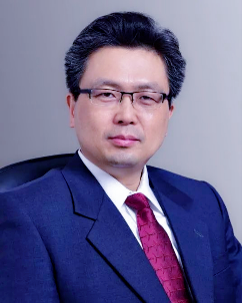
Ronghai Qu (Fellow, IEEE) was born in China. He received the B.E.E. and M.S.E.E. degrees from Tsinghua University, Beijing, China, in 1993 and 1996, respectively, and the Ph.D. degree from the University of Wisconsin-Madison, Madison, WI, USA, in 2002, all in electrical engineering. In 1998, he was with Wisconsin Electric Machines and Power Electronics Consortiums, University of Wisconsin-Madison, as a Research Assistant. In 2002, he became a Senior Electrical Engineer with Northland, a Scott Fetzer Company, Watertown, NY, USA. Since 2003, he has been with the Electrical Machines and Drives Laboratory, General Electric Global Research Center, Niskayuna, NY, USA, as a Senior Electrical Engineer. Since 2010, he has been a Professor with the Huazhong University of Science and Technology, Wuhan, China. He has authored more than 400 published technical articles and is the Holder of more than 200 patents/patent applications.
Wuhan University
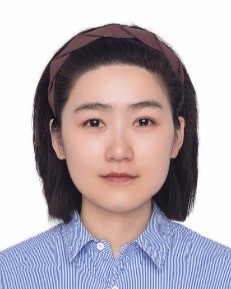
Yuting Gao (Senior Member, IEEE) received the B.S. and Ph.D. degrees in electrical engineering from the Huazhong University of Science and Technology, Wuhan, China, in 2012 and 2017, respectively. From 2017 to 2019, she was a Postdoctor with Huazhong University and Science and Technology. From 2019 to 2021, she was an Alexander von Humboldt Postdoctoral Fellow with the Karlsruhe Institute of Technology, Karlsruhe, Germany. From 2021 to 2023, she was a Japan Society for the Promotion of Science International Research Fellow with the Nagoya Institute of Technology, Nagoya, Japan. Since 2023, she has been a Professor with Wuhan University, Wuhan. Her research interests include the design and analysis of flux modulation permanent magnet machines. She serves as an Associate Editor of IEEE Transactions on Transportation Electrification and IEEE Transactions on Industry Applications.
Xi’an Jiaotong University
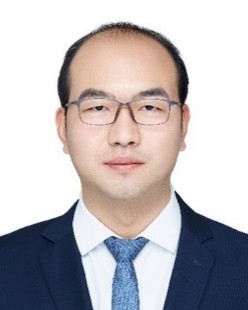
Shaofeng Jia (Senior Member, IEEE) received the B. Eng. degree from Xi’an Jiaotong University, Xi’an, China, in 2012, and the Ph.D. degree from the Huazhong University of Science and Technology, Wuhan, China, in 2017, both in electrical engineering. He is currently a Professor with the School of Electrical Engineering, Xi’an Jiaotong University. He is the Author/Co-author of about 80 IEEE technical papers. His research interests include design and control of novel permanent magnet and reluctance machines.