
The global transition toward electrified transportation-including electric vehicles (EVs), electric vertical take-off and landing (eVTOL) aircraft, and high-speed rail has imposed unprecedented performance requirements on motor drive systems. Beyond high steady-state efficiency, these emerging applications demand ultra-fast dynamic response, high power density, strong disturbance rejection, and high reliability under wide-ranging and extreme operating conditions. This Special Issue focuses on recent advances in high-performance motor drive systems, emphasizing the integration of modern control theories, intelligent algorithms, and advanced sensing technologies, as well as their practical implementation in electrical machine drives for emerging electrified transportation applications.
Topics of interest include, but are not limited to, the following:
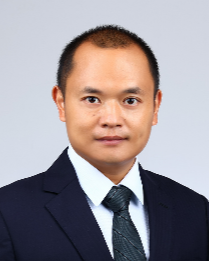
Nanjing University of Aeronautics and Astronautics
Yuefei Zuo received his B.Eng. degree in electrical engineering and automation and his Ph.D. degrees in power electronics and electrical drives both from Nanjing University of Aeronautics and Astronautics, Nanjing, China, in 2010 and 2016, respectively. From Jul. 2016 to Feb. 2019, he was a Lecturer with the School of Electrical and Information Engineering, Jiangsu University, Zhenjiang, China. In Mar. 2019, he joined the School of Electrical and Electronic Engineering, Nanyang Technological University, Singapore, as a Research Fellow, and was promoted to a Senior Research Fellow in Jul. 2022. In Apr. 2023, he joined the Department of Aeronautical and Automotive Engineering, Loughborough University, Loughborough, U.K., as a Research Associate. He is currently a Full Professor with the College of Automation Engineering, Nanjing University of Aeronautics and Astronautics, Nanjing, China. His research interests include electric machines and drives, active disturbance rejection control, model predictive control, and Artificial Intelligence (AI) based control techniques.
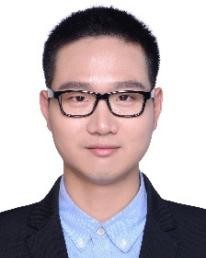
Nanyang Technological University
Yiming Shen obtained his B.Eng. and Ph.D. degrees in electrical engineering from the College of Electrical Engineering, Zhejiang University, Hangzhou, China, in 2015 and 2020, respectively. Following his doctoral studies, Dr. Shen served as a Postdoctoral Fellow at the College of Electrical Engineering, Zhejiang University, Hangzhou, China, from 2020 to 2022. Since 2022, he has held the position of Research Fellow at the School of Electrical and Electronic Engineering, Nanyang Technological University, Singapore. His research focuses on the design and analysis of novel permanent magnet machines, with a specific emphasis on linear machines for direct drive applications.
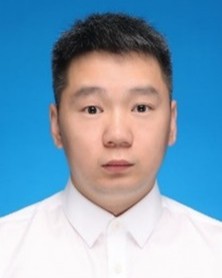
Xidian University
Chunqiang Liu received the Ph.D. degree in electrical engineering from Northwestern Polytechnical University, Xi’an, China, in 2021. He is an assistant professor at the Hangzhou Institute of Technology, Xidian University. He is dedicated to servo control of permanent magnet synchronous motors. He served as a member of the Youth Work Committee of the China Power Supply Society and a senior member of the China Electrotechnical Society. He was selected as a high-level talent (Class C) in Hangzhou and a TOP5% highly cited scholar by CNKI in 2024 and 2025.
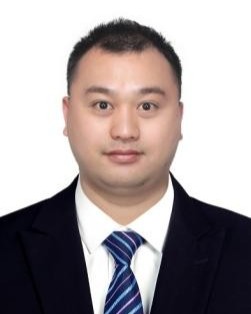
Southwest Jiaotong University
Huimin Wang received the B. Eng. degrees in electrical engineering from Southwest Jiaotong University (SWJTU), Chengdu, China, in 2016 and the Ph.D. degree in electrical engineering from Southwest Jiaotong University (SWJTU), Chengdu, China, in 2021. From October 2019 to October 2020, he has been a Visiting Ph.D. student with the Department of Energy Technology, Aalborg University, Denmark. His research interests include reliability evaluation of traction drive applications and AC motor drive system and its speed-sensorless control. He serves as the guest Editor for IET Electric Power Applications, and the session chair at the 10th International Power Electronics and Motion Control Conference. Dr. Wang was a recipient of the Best Paper Award of IEEE Transportation Electrification Conference and EXPO Asia-Pacific (ITEC Asia-Pacific) in 2019 and the Best Special Session Chair Award at the 10th International Power Electronics and Motion Control (IPEMC 2024) Conference in 2024.
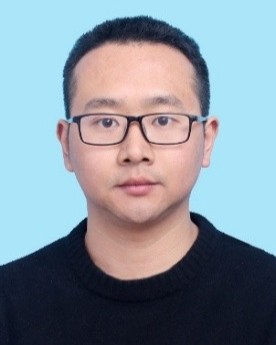
Nanyang Technological University
Kailiang Yu received the B.E. degree from Southeast University, Nanjing, China, in 2016, M.S. degree from Huazhong University of Science and Technology, Wuhan, China, in 2019, and Ph. D. degree from Southeast University, Nanjing, China, in 2023, all in electrical engineering.He is currently a Postdoctoral Research Fellow with Nanyang Technological University, Singapore. His research interests include the control of multiphase permanent magnet synchronous motor, such as parameter estimation, position sensorless control, and fault-tolerance control.
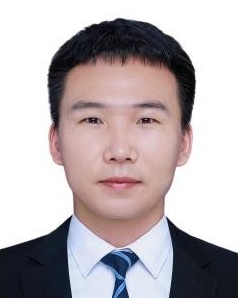
Ningbo Institute of Materials Technology and Engineering, Chinese Academy of Sciences
Haiyang Cao received the Ph.D. degree in mechatronic engineering from the University of Chinese Academy of Sciences, Beijing, China, and the Changchun Institute of Optics, Fine Mechanics and Physics, Chinese Academy of Sciences, Changchun, China, in 2025. He is currently an Associate Professor with the Ningbo Institute of Materials Technology and Engineering, Chinese Academy of Sciences, Ningbo, China. From 2023 to 2024, he was a Visiting Researcher with the School of Electrical and Electronic Engineering, Nanyang Technological University, Singapore. His research interests include electric machines and drives, and advanced control strategies.
While emerging electrified transportation and industrial automation demand higher power density and dynamic performance, safety and continuous operation capability remain the ultimate constraints for these mission-critical applications. Unlike general-purpose drives, systems in aerospace, traction, and hazardous environments must withstand component failures and extreme conditions without catastrophic shutdowns. This special session focuses on the reliability assurance and fault survivability of electric drive systems. We aim to move beyond standard performance indicators and explore the frontiers of robust machine topologies, intrinsic fault-tolerant architectures, and resilient control strategies. We invite researchers to discuss how to design unbreakable drive systems that bridge the gap between high performance and absolute safety.
Topics of interest include, but are not limited to, the following:

Nanjing University of Aeronautics and Astronautics
Hui Yang (Senior Member, IEEE) received the B. Eng. degree from Dalian University of Technology, Dalian, China in 2011, and the Ph.D. degree from Southeast University, Nanjing, China in 2016, respectively, all in electrical engineering. From 2014 to 2015, he was a one-year joint Ph.D. student at The University of Sheffield, Sheffield, U.K. From 2019 to 2020, he served as a Postdoctoral Fellow at School of Electrical Engineering, The Hong Kong Polytechnic University. From 2016 to 2024, Prof. Yang was with Southeast University, China, and is currently a Full Professor at the College of Automation Engineering, Nanjing University of Aeronautics and Astronautics (NUAA). Prof. Yang serves as Associate Editor of IEEE Transactions on Industrial Electronics, IEEE Transactions on Energy Conversion, and Editor of WEVJ. He served as Organizing Committee Chair of iSPEC 2021 and CIEEC 2022. His research interests include novel permanent-magnet machines and drives with particular reference to variable-flux machines for electric vehicles, robotics, and renewable energy applications. He has authored or co-authored over 120 IEEE Transactions papers and is the holder of more than 40 patents in these areas.
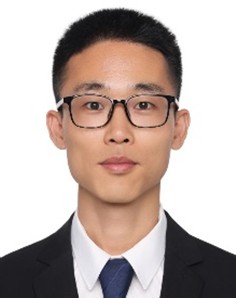
Sichuan University
Xueqing Wang, Associate Professor at Sichuan University, IEEE Senior Member. He has been selected for the Sichuan Provincial Talent Program, Sichuan University Talent Program, and the global Top 2% Scientists list. He has led over 10 national, provincial, and enterprise projects. As the first or corresponding author, he has published more than 30 SCI journal papers, with over 2,800 citations on Google Scholar. His main research interests include AC motor control, multilevel power converters, fault diagnosis and fault-tolerant control, design of planar winding motor.
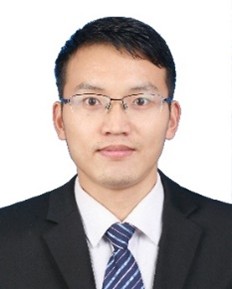
Nantong University
Xuhui Zhu (Member, IEEE) received the B.Sc. and Ph.D. degrees in electrical engineering from Jiangsu University, Zhenjiang, China, in 2015 and 2021. From 2022 to 2024, he was a Postdoctoral Research Fellow with the School of Electrical and Electronic Engineering, Nanyang Technological University, Singapore. He is currently a Lecturer with Nantong University, Nantong, China. His research interests include electric motor design, electromagnetic field analysis, and motor control.
Southeast University
Wei Qin (Member, IEEE) received the B.Sc. degree in electrical engineering from Henan Polytechnic University, Jiaozuo, China, in 2016, the M.Sc. degree in power electronics and electrical drives from the Nanjing University of Science and Technology, Nanjing, China, in 2019, where his research focused on fault diagnosis and fault-tolerant control of wind power converter systems, and the Ph.D. degree in electrical engineering with Southeast University, Nanjing, in 2024. Since then, he has been a Research Assistant & Zhishan Postdoctoral Fellow at Southeast University. He serves as the principal investigator of the National Natural Science Foundation of China (NSFC) Youth Science Fund and the China Postdoctoral Science Foundation General Program. He has been selected for the National Postdoctoral Program for Innovative Talents (Category B) and the Jiangsu Provincial Young Science and Technology Talent Support Program. His research interests include vector magnetic circuit theory and magnetic field modulation theory. In these areas, he has published over 20 papers and one academic monograph, and holds over 14 Chinese invention patents and 5 U.S. invention patents.
Hohai University
Xu Wang (Member, IEEE) received the B.S. and M.S. degrees in electrical engineering from Jiangnan University, Wuxi, China, in 2016 and 2019, respectively, and the Ph.D. degree in electrical engineering from the Southeast University, Nanjing, China, in 2024. From 2022 to 2023, He was a visiting researcher in the School of Electronic and Electrical Engineering, Nanyang Technological University, Singapore. He is currently a lecturer with the School of Electrical and Power Engineering, Hohai University, Nanjing. His teaching and research interests include machine design and electric drives, electric vehicles, and variable speed pumped storage systems.

Zhejiang University of Technology
Guanghui Yang (Member, IEEE) received the B.Sc. degree from the Southeast University, Nanjing, China, in 2019, and the Ph.D. degree from Zhejiang University, Hangzhou, China, in 2024, both in electrical engineering. Currently, he is an Assistant Professor with the College of Information Engineering, Zhejiang University of Technology, Hangzhou, China. From 2022 to 2023, he was a Visiting Researcher with Nanyang Technological University, Singapore. His research interests include multileg inverter-driven motor system, adaptive control, and direct-drive technologies.
Permanent magnet synchronous machines (PMSMs) have become a key technology for transportation electrification, industrial drives, and advanced automation systems. The growing demand for compact and lightweight energy conversion systems has driven intensive research efforts toward improving the torque/power density of PMSMs. In recent years, various advanced machine topologies have been proposed and investigated, such as dual-rotor and dual-stator machines, axial-flux machines, and field-modulation machines. These topologies can improve PM utilization, increase output torque capability, and facilitate the employment of PMSMs in high-performance applications.
Besides, further improvement of machine torque/power density is constrained by thermal management capability. Higher current density and power loading result in significant loss generation and temperature rise, which may lead to material degradation, demagnetization risk, and reduced operational reliability. Therefore, advanced cooling technologies and electromagnetic–thermal coupled design methodologies are essential to fully exploit the performance potential of high torque/power density PMSMs.
This special session focuses on the latest advances in design and analysis of high torque/power density PMSMs.
Topics of interest include, but are not limited to:

University of Sheffield
Yang Li received the B.Eng. degree in mechanical engineering from Jinling Institute of Technology, Nanjing, China, in 2018, the M.Eng. degree in electrical engineering from Southeast University, Nanjing, China, in 2022, and the Ph.D. degree in electrical engineering from The University of Sheffield, Sheffield, U.K., in 2026. His research interests include the design and analysis of electrical machines, with a specific emphasis on Halbach PM machines, dual-rotor and dual-stator machines.
Nanyang Technological University
Yiming Shen obtained his B.Eng. and Ph.D. degrees in electrical engineering from the College of Electrical Engineering, Zhejiang University, Hangzhou, China, in 2015 and 2020, respectively. Following his doctoral studies, Dr. Shen served as a Postdoctoral Fellow at the College of Electrical Engineering, Zhejiang University, Hangzhou, China, from 2020 to 2022. Since 2022, he has held the position of Research Fellow at the School of Electrical and Electronic Engineering, Nanyang Technological University, Singapore. His research focuses on the design and analysis of novel permanent magnet machines, with a specific emphasis on linear machines for direct drive applications.
Tongji University
Tianran He received the B.Eng. degree in electrical engineering from the Harbin Institute of Technology, Harbin, China, in 2014, and the M.Sc. and Ph.D. degrees in electrical engineering from The University of Sheffield, Sheffield, U.K. in 2017 and 2021, respectively. From 2014 to 2016, he was an Engineer with Shanghai Electric Wind Power Group Company, Ltd., Shanghai, China. He is currently a Tenure-track Assistant Professor with the School of Electronic and Information Engineering, Tongji University, Shanghai. His major research interests include the design and analysis of high-speed permanent magnet brushless motors and permanent magnet motors.

Southeast University
Ji Qi received the B.Sc. and M.Sc. degrees in electrical engineering from the School of Electrical Engineering, Southeast University, Nanjing, China, in 2016 and 2019, respectively. He received the Ph.D. degree in electrical engineering with The University of Sheffield, Sheffield, U.K., in 2023. Since 2023, he has been with Southeast University, where he is currently a Lecturer. His research focuses on the design of high-performance hub machine for electrical vehicles.

University of Leicester
Yang Xiao received the B. Eng. and Ph.D. degrees in electrical engineering from the Huazhong University of Science and Technology, Wuhan, China, in 2013 and 2018, respectively. He received the Ph.D. (second) degree in electronic and electrical engineering with The University of Sheffield, Sheffield, U.K., in 2021. He joined the School of Engineering at the University of Leicester in 2023 as a Lecturer. His current research interests include the design of permanent magnet machines.
Harbin Institute of Technology
Dawei Liang received the B.Eng. degree in electrical engineering from the Harbin Institute of Technology, Harbin, China, in 2014, the M.Sc. degree in electrical engineering from the Karlsruhe Institute of Technology, Karlsruhe, Germany, in 2018, and the Ph.D. degree in electrical engineering from the University of Sheffield, Sheffield, U.K., in 2022. He served as a Post-doctoral Research Associate with the University of Sheffield from 2022 to 2025. He is currently a Professor with the School of Electrical Engineering and Automation, Harbin Institute of Technology. His major research interests include thermal modeling and management, and parameter identification of electrical machines.
Artificial Intelligence (AI) is fundamentally reshaping the design and control paradigm of electrical machines, enabling a shift from conventional experience-driven development to data-driven, physics-informed, and highly automated engineering processes. With increasing demands for higher efficiency, power density, reliability, and rapid development in applications such as electric vehicles, renewable energy systems, robotics, and aerospace electrification, AI-based approaches are becoming essential tools for next-generation machines. At the control level, AI-based strategies such as reinforcement learning enhance dynamic performance, fault tolerance, and real-time adaptability.
Meanwhile, Large Language Models (LLMs) are emerging as powerful enablers for intelligent engineering workflows, supporting knowledge extraction from large scientific databases, material and topology recommendation, parameter initialization, and coordination of multiphysics simulations within digital twin frameworks. This special session aims to bridge advanced AI methodologies with practical electrical machine engineering.
Topics of interest mainly include:
Gang Lei (Senior Member, IEEE) received his Ph.D. degree in Electrical Engineering from Huazhong University of Science and Technology in 2009. He is currently an Associate Professor at the School of Electrical and Data Engineering at the University of Technology Sydney (UTS), Australia. He has published 2 books in Springer and over 300 research papers, including 150+ IEEE Transactions articles. He serves as an Associate Editor of 6 journals, including IEEE Transactions on Transportation Electrification, IEEE Transactions on Industrial Electronics, and IEEE Transactions on Energy Conversion. He has organised 9 special issues/sections for several journals, including IEEE Transactions on Energy Conversion.
Xiaodong Sun (Senior Member, IEEE) received the B.Sc. degree in electrical engineering, and the M.Sc. and Ph.D. degrees in control engineering from Jiangsu University, Zhenjiang, China, in 2004, 2008, and 2011, respectively. Since 2004, he has been with Jiangsu University, where he is currently a Professor in vehicle engineering with the Automotive Engineering Research Institute. From 2014 to 2015, he was a Visiting Professor with the School of Electrical, Mechanical, and Mechatronic Systems, University of Technology Sydney, Sydney, Australia. He has authored or coauthored more than 100 refereed technical papers and one book, and he is the holder of 42 patents in his areas of interest. His current teaching and research interests include electrified vehicles, electrical machines, electrical drives, and energy management. Dr. Sun is an Associate Editor of IEEE Transactions on Industrial Electronics, Associate Editor of IEEE Transactions on Transportation Electrification, and an Editor of IEEE Transactions on Energy Conversion.
Chengcheng Liu (Member, IEEE) was born in Jiangsu, China, in 1988. He received the B.E. degree in automation engineering from Yangzhou University, Yangzhou, China, in 2010, and the Ph.D. degree in electrical engineering from Hebei University of Technology, Tianjin, China, in 2016. He was a joint Ph.D. Student supported by the Chinese Scholarship Council with the University of Technology Sydney, Ultimo, NSW, Australia. He is currently an Associate Professor with Hebei University of Technology. His research interests include the design, analysis, and control and optimization of electromagnetic devices.
Tao Wu (Senior Member, IEEE) received the B.E. and M.S. degrees from China University of Geoscience, Wuhan, Hubei, China, in 2001 and 2004, respectively, and the Ph.D. degree in motors and electrical appliances from the Huazhong University of Science and Technology, Wuhan, in 2010. He is currently an Associate Professor at the School of Automation, China University of Geoscience. His current research interests include motors and controls, design, and optimization of electrical drive systems.
Jianguo Zhu (Fellow, IEEE) received the B.E. degree in electrical engineering from Jiangsu Institute of Technology, Zhenjiang, China, in 1982, the M.E. degree in electrical engineering from Shanghai University of Technology, Shanghai, China, in 1987, and the Ph.D. degree in electrical engineering from the University of Technology Sydney (UTS), Ultimo, NSW, Australia, in 1995. He is currently a Professor of Electrical Engineering at the School of Electrical and Information Engineering, University of Sydney, Camperdown, NSW, Australia. His research interests include electromagnetic and magnetic properties of materials, electrical machines and drives, power electronics, and green energy systems.
The rapid development of robotics, particularly in autonomous systems and intelligent robots, has driven the need for efficient and reliable electric drive systems, precise control, and real-time motor health monitoring for robotic joint actuators. This special session focuses on the latest advancements in electric systems, motor control strategies, and motor health monitoring techniques specifically designed for robotic joints. It covers the optimization of electric motors for precise joint movements, as well as the implementation of advanced control algorithms to ensure high-performance operation in dynamic and varying environments. Additionally, the session will explore innovative motor health monitoring systems that enable real-time fault detection, predictive maintenance, and performance optimization to extend the operational lifespan of robotic systems. Researchers and industry experts will have the opportunity to share cutting-edge developments and emerging trends in these areas, driving the next generation of robotic joint actuators for a wide range of applications, from industrial robotics to healthcare and service robots.
Advancements in robotics, particularly autonomous systems and intelligent robots, have underscored the critical need for efficient and reliable electric drive systems, precise control, and real-time motor health monitoring for robotic joint actuators. This special session focuses on the latest advancements in electric systems, motor control strategies, and motor health monitoring techniques dedicated to robotic joints. It covers the optimization of electric motors for accurate joint actuation, as well as the implementation of advanced control algorithms to guarantee high-performance operation in dynamic and varying environments. Moreover, the session will explore innovative motor health monitoring systems that enable real-time fault detection, predictive maintenance, and performance optimization to extend the service life of robotic systems. Researchers and industrial experts are invited to share cutting-edge progress and emerging trends in these fields, promoting next-generation robotic joint actuators for diverse applications including industrial robotics, healthcare, and service robots.
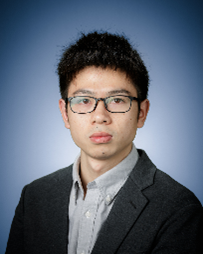
Dianxun Xiao
The Hong Kong University of Science and Technology (Guangzhou)
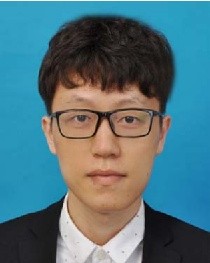
Gaoliang Fang
The University of Prince Edward Island
Xiaoqiang Guo
Southeast University

Zifeng Chen
The Hong Kong University of Science and Technology (Guangzhou)
Electrical machines are a key enabling technology for electric vertical take-off and landing (eVTOL) propulsion systems. The demand for lightweight, compact, and high-efficiency airborne power systems continues to grow. This demand drives the development of advanced machine topologies, such as axial-flux machines, multi-phase permanent magnet machines, and other high-specific-power configurations. These designs improve torque capability and magnet utilization. They also provide greater flexibility for high-performance applications.
Despite these advances, further improvement in power density and efficiency is increasingly constrained by thermal limitations. High current loading and compact structures increase loss generation and temperature rise. This creates challenges for insulation reliability, magnet stability, and overall system performance. As power density increases, thermal issues become more severe. Effective thermal management is therefore essential. Electromagnetic–thermal coupled design is also required for next-generation eVTOL propulsion machines.
This special session focuses on the latest advances in design, analysis and thermal management of electrical machines for eVTOL propulsion.
Topics of interest include, but are not limited to:
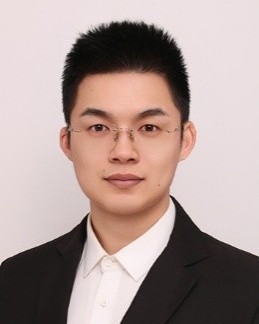
Nanyang Technological University
Donghui Cao (Member, IEEE) received the B.Sc. and Ph.D. degrees in electrical engineering from Jiangsu University, Zhenjiang, China, in 2018 and 2023, respectively. He is currently a Postdoctoral Research Fellow with Nanyang Technological Univeristy, Singapore. His current research interests include electromagnetic field computation and thermal analysis for permanent magnet machine.
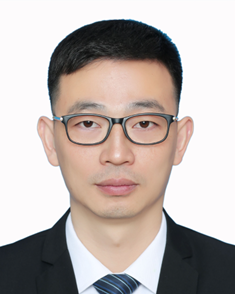
Jiangsu University
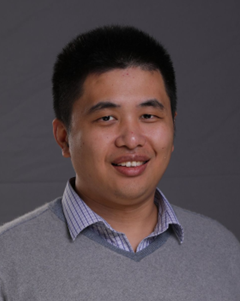
Tao Tao (Member, IEEE) received the B.Sc. degree from Nanjing Agricultural University, Nanjing, China, in 2009, and the Ph.D. degree from Jiangsu University, Zhenjiang, China, in 2020, both in electrical engineering.,Since 2021, he has been with Jiangsu University, where he is currently a Associate Professor with the School of Electrical Information Engineering. His research interest includes the control of multiphase permanent-magnet machines.
Jiangsu University
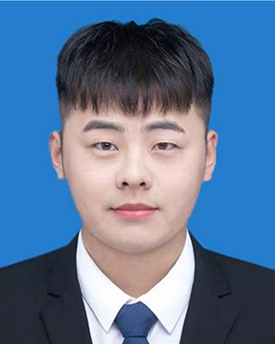
Zhengmeng Liu (Member, IEEE) received the B.S. degree from Chongqing University, Chongqing, China, in 2013, the M.S. degree from Jiangsu University, Zhenjiang, China, in 2016, and the Ph.D. degree from the University of Sheffield, Sheffield, U.K., in 2021, all in electrical engineering. Since 2021, he has been with Jiangsu University, where he is currently a Lecturer with the School of Electrical Information Engineering. His research interests include the design and analysis of permanent magnet electrical machines and linear actuators.
Nanjing Institute of Technology
Yuhua Sun received the B.Sc. degree in electrical engineering from the Qilu University of Technology (Shandong Academy of Sciences), Jinan, China, in 2017, and the Ph. D. degree in electrical engineering from Jiangsu University, Zhenjiang, China, in 2024. From 2022 to 2023, he was joint Ph.D. Student funded with the Department of Industrial Engineering, University of Padova, Padova, Italy. He is currently a Lecturer with the School of Electric Power Engineering, Nanjing Institute of Technology. His research interests include machine design and electromagnetic field analysis.

Newcastle University
Barrie C. Mecrow (Member, IEEE) received the Ph.D. degree from the University of Newcastle upon Tyne, Newcastle upon Tyne, U.K., in 1987 for his research into 3-D eddy-current computation applied to turbogenerators. He commenced his career as a Turbo-Generator Design Engineer with NEI Parsons, Newcastle upon Tyne, U.K. He became a Lecturer in 1987 and a Professor of Electrical Power Engineering in 1998 with Newcastle University, Newcastle upon Tyne. His research interests include fault tolerant drives, high performance PM machines and novel switched reluctance drives. He is actively involved with industry in the aerospace, automotive and consumer product sectors, who fund a large range of projects.

Zhejiang University of Water Resources and Electric Power
Yan Zhu received the PhD. degree in agricultural engineering in 2024 from Jiangsu University, Zhenjiang, China. She is currently a lecturer at Zhejiang University of Water Resources and Electric Power. Her current research interests include high efficiency electric machine design and electromagnetic field analysis.
Transportation electrification is the most effective innovation technology for solving the global energy crisis and alleviating environmental pollution. As the core bridge, the advanced topology circuits, control strategies, and optimization algorithms of power converter systems are critical for improving the performance, reliability, and sustainability of electric vehicles, charging stations, electric ships, and more/all-electric aircrafts. This special session focuses on innovative solutions for controlling and optimizing power converter systems in electrified transportation to address challenges related to efficiency, stability, and fault tolerance.
Topics of interest include, but are not limited to:
Northwestern Polytechnical University
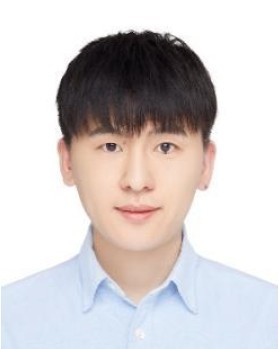
Xiangke Li received his Ph.D. degree from Northwestern Polytechnical University and was a joint Ph.D. student at Nanyang Technological University, Singapore, as well as a Postdoctoral Fellow at The Hong Kong Polytechnic University. Since 2024, he is a Professor at Northwestern Polytechnical University. His research interests mainly include modeling, stability analysis, advanced control and intelligent optimization of power-electronic-based land, shipboard and airborne power systems.
Northwestern Polytechnical University
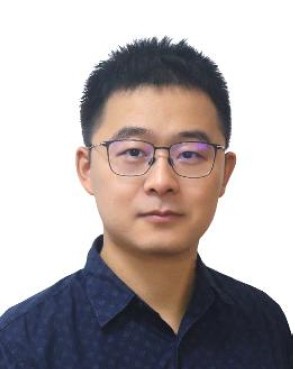
Fei Deng received the B.E. and Ph.D. degrees in electrical engineering from the
Northwestern Polytechnical University, Xi’an, China, in 2015 and 2021, respectively. From October 2018 to November 2020, he was a Visiting Student with the University of Padova, Vicenza, Italy. From March 2022 to March 2025, he was a Research Fellow with the Energy Research Institute, Nanyang Technological University, Singapore. He is now with the School of Automation in Northwestern Polytechnical University as professor. His research interests include power management and energy optimization in renewable energy microgrids and electric aircraft.
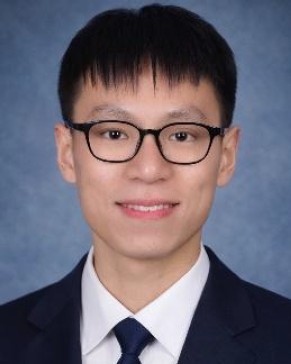
Nanyang Technological University
Ziheng Xiao received the B.S. degree in electrical engineering and automation and Ph.D. degree in electrical engineering from the College of Electrical and Information Engineering, Hunan University, Changsha, China, in 2017 and 2022, respectively. Since 2022, he has been a Research Fellow with the Energy Research Institute at Nanyang Technological University, Singapore. Since 2023, he has also served as a part-time lecturer in the School of Electrical and Electronic Engineering at the same university. His main research interests include the medium voltage dc system, dual active bridge converters, resonant converters, energy router in renewable energy systems, and the application of artificial intelligence in power electronics. Dr. Xiao was a recipient of the Best Paper Award First Prize in ECCE Asia in 2024. He also served as the Session chair for the 49th Annual Conference of the IEEE Industrial Electronics Society.

Nanjing University of Aeronautics and
Astronautics
Pengwei Chen received the B.S. and Ph.D. degrees in electric power engineering from the North China Electric Power University, Beijing, China, in 2014 and 2019, respectively. Currently, he is an Associate Professor with Nanjing University of Aeronautics and Astronautics, Nanjing, China, and a Postdoctoral Fellow of Hong Kong Scholar Program with the Hong Kong Polytechnic University, Hong Kong, China. His research interests include dc distribution network simulation, stability, and power quality control.
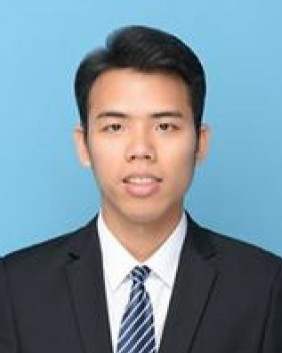
City University of Hong Kong
Sunhua Huang received the Ph.D. degree in electrical engineering from Shanghai Jiao Tong University, Shanghai, China, in 2022. From 2018 to 2019, he worked as a Research Engineer with Huawei Technologies Company Ltd., Shenzhen, China. From 2022 to 2023, he worked as an Assistant Professor in the School of Mechatronic Engineering and Automation, Shanghai University, Shanghai, China. From 2023 to 2025, he worked as a Postdoctoral fellow in the Hong Kong Polytechnic University. Currently, he is working as a Research Fellow in the City University of Hong Kong. His research interests are power system stability control, renewable energy, grid-forming control and AC/DC microgrids.
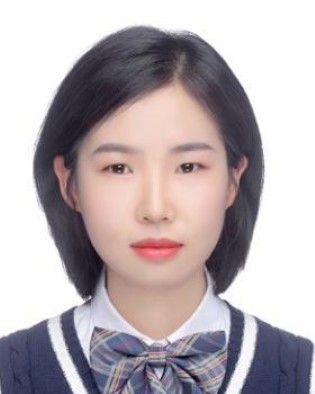
The Hong Kong Polytechnic University
Xinyue Zhang received the B.S. and M.S. degrees in 2016 and 2019, respectively, and the Ph.D. degree in 2025, all in electrical engineering from Northwestern Polytechnical University, China. From 2022 to 2023, she was a visiting student at Aalborg University, Denmark. She is currently a Postdoctoral Scholar at The Hong Kong Polytechnic University, Hong Kong. Her research focuses on power electronics, with particular emphasis on converter design, condition monitoring, and reliability analysis.
The rapid electrification of transportation, aerospace propulsion, and industrial systems has created an urgent demand for electric drives with higher power density, efficiency, reliability, and controllability. Flux-modulated machines (FMMs) have recently emerged as promising candidates for next-generation electric drive systems due to their inherent capability of achieving high torque density and improved electromagnetic performance through magnetic field modulation mechanisms. These machines offer unique advantages for applications such as electric vehicles, electric aircraft propulsion, robotics, and renewable energy systems.
The contributions in this special section highlight recent progress in both theoretical developments and practical implementations of flux-modulated machine technologies. Through these works, the section provides valuable insights into the challenges and opportunities in advancing high-performance electric drive systems and promotes further research and development toward enabling next-generation electrified mobility and energy systems.
Topics of interest include, but are not limited to:

University of Strathclyde
Xin Yuan (Senior Member, IEEE) received the B.S. and M.S. degrees in 2013 and 2016, respectively, and the Ph.D. degree in electrical engineering from the Beijing Institute of Technology, Beijing, China, in 2020. He joined the Department of Electronic & Electrical Engineering at the University of Strathclyde in 2025, worked as a Senior Lecturer (Strathclyde Chancellor’s Fellows & Associate Professor). Before joining the University of Strathclyde, He worked as a Lecturer (Assistant Professor) at the School of Engineering of the University of Aberdeen, Research Assistant Professor at the Department of Electrical and Electronic Engineering of Hong Kong Polytechnic University, Hong Kong, and Research Associate at the PEMC Group of the University of Nottingham, UK. He was also a Postdoctoral Research Fellow with the School of Electrical and Electronic Engineering, Nanyang Technological University, Singapore. His speciality mainly contains the high-efficiency/fault-tolerant/low switching frequency/EMI suppression AC machine control and high-power density integrated multilevel WBG power converter hardware design with EMI suppression.
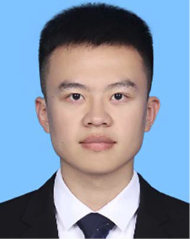
Harbin Institute of Technology
Mingqiao Wang (Member, IEEE) received the B.S. and Ph.D. degree in electrical engineering from Harbin Institute of Technology, Harbin, China, in 2016 and 2021, respectively.,Since 2022, he has been with Harbin Institute of Technology, where he has been an Associate Research Fellow since 2025. He is the author or coauthor of 37 published refereed technical papers. He is the holder of 19 Chinese invention patents. His current research interests include design and control of variable flux machines, and the intelligent computing of electric machine system.
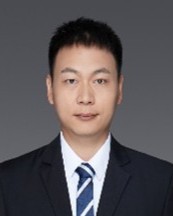
Anhui University
Ya Li (Member, IEEE) received the Ph.D. degree from the School of Electrical Engineering, Southeast University, Nanjing, China, in 2021.Since 2022, he has been with Anhui University, Hefei, China, where he is currently an Associate professor. His research interests include novel permanent magnet machines, field modulation machines and variable-flux machine for electric vehicles.
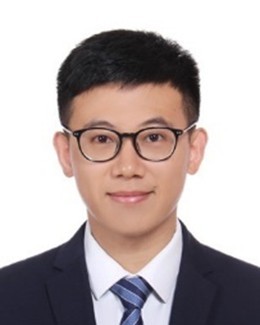
Nanyang Technological University
Yanlei Yu (Member, IEEE) received the B.E. degree from Chongqing University, Chongqing, China, in 2016, and the Ph.D. degree in electrical engineering from the Harbin Institute of Technology, Harbin, China, in 2022. From 2020 to 2021, he was with the Sino-Germany Joint Research Project, Karlsruhe Institute of Technology, Karlsruhe, Germany, for one year study. He is currently a Research Fellow with Electrical and Electronic Engineering, Nanyang Technological University, Singapore. His research interests include the design and analysis of high-torque and high-power density machines and drives, novel electrical machines, thermal and cooling system design, and temperature field analysis, especially for high-power electric drive applications, such as heavy-duty electric vehicles, electric aircraft, and eVTOLs.

Nanyang Technological University
An Li (Member, IEEE) was born in Wuhan, China, in 1996. He received the B.Eng. and Ph.D. degrees in electrical engineering from the School of Electrical and Electronic Engineering, Huazhong University of Science and Technology, Wuhan, China, in 2017 and 2022, respectively. He is currently a Research Fellow with the School of Mechanical and Aerospace Engineering, Nanyang Technological University. His research interests include bionic robots, joint modules, and electromagnetic actuators.
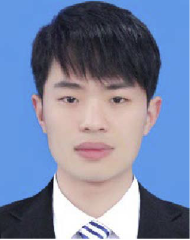
Zhejiang University Advanced Electrical Equipment Innovation Centre
Shuangchun Xie (Member, IEEE) received the B.Sc. degree in electrical engineering and automation from the Nanjing University of Aeronautics and Astronautics, Nanjing, China, in 2017, and the Ph.D. degree from the School of Electrical and Electronic Engineering, Nanyang Technological University, Singapore, in 2023. He is currently a Researcher at Zhejiang University Advanced Electrical Equipment Innovation Centre. His research interests include power electronics, electrical machines and drives, and electric vehicle technologies.
With the increasing demand for electrified transportation, aerospace actuation, marine propulsion, renewable energy conversion, and high-end industrial drives, electrical machines are required to achieve higher power density, improved fault tolerance, enhanced efficiency, and greater operational flexibility. Multiphase and multi-winding electrical machines have emerged as promising solutions.
Recent advances in machine topology, winding configuration, electromagnetic optimization, and control algorithms have significantly expanded the application potential of these machines. At the same time, new technical challenges continue to arise, including electromagnetic coupling among winding sets, parameter mismatch, current sharing, torque ripple suppression, multi-degree-of-freedom control, sensorless operation, and coordinated fault-tolerant control under open-phase or converter failure conditions.
This special session aims to bring together researchers and engineers from academia and industry to present the latest progress in the design, modeling, analysis, and control of multiphase and multi-winding electrical machines. Contributions addressing both fundamental theories and practical implementations are highly welcome.
Topics of interest include, but are not limited to:
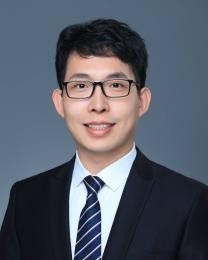
Harbin Institute of Technology
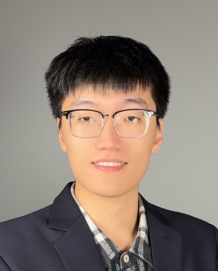
Wentao Zhang received the B.S. degree in electrical engineering and automation from the Harbin Institute of Technology, Weihai, China, in 2016, and the Ph.D.degree in electrical engineering from the Harbin Institute of Technology, Harbin, China, in 2021. He is currently an Associate Professor with the Special Motor Research Center, Harbin Institute of Technology, Harbin. His research interests include PMSM drives and control algorithms.
The Hong Kong Polytechnic University
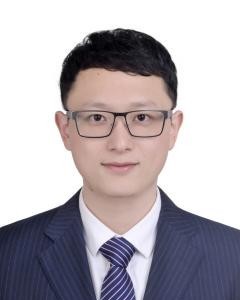
Zaixin Song (Member, IEEE) received the B.Eng. and M.Eng. degrees in electrical engineering and automation from Harbin Institute of Technology (HIT), Harbin, China, in 2016 and 2018, respectively, and the Ph.D. degree in electrical engineering from the City University of Hong Kong (CityU), Hong Kong SAR, China, in 2021.,He worked as a Postdoctoral Research Fellow with the CityU, in 2021, and Nanyang Technological University, Singapore, in 2022. Currently, he is working as a Research Assistant Professor with the State Key Laboratory of Ultra-precision Machining Technology (SKL-UMT), Department of Industrial and Systems Engineering, The Hong Kong Polytechnic University, Hong Kong Special Administrative Region (SAR), China. He has been working on electric machinery for years. His expertise lies in the reliability design of electric machines and multiphysics modeling. His research interests include design and control of modern electric drives, smart manufacturing and robotics drives, sustainable electric propulsion machines, and among other related fields.,Dr. Song has published over 90 research articles and authorized over 20 patents. Currently, he is a member of China Electrotechnical Society (CES), IISE, Elsevier Applied Energy Academy; Project Coordinator of SKL-UMT; and served as a Session Chair of IEEE conferences for many times.
Huazhong University of Science and Technology
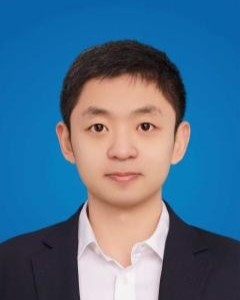
Yawei Wang (Senior Member, IEEE) received the B.S. and M.S. degrees in Electrical Engineering from China University of Mining and Technology, Xuzhou, China, in 2012 and Huazhong University of Science and Technology, Wuhan, China, in 2015, respectively. He obtained his Ph.D. degree in Electrical Engineering from University of Padova, Padova, Italy, in 2019. From 2019 to 2020, he served as a postdoctoral researcher in the Department of Electrical and Computer Engineering, McMaster University, Hamilton, ON, Canada. In 2020, he was selected into the “TalentEdge Fellow” program in Canada. He is currently an associate professor at Huazhong University of Science and Technology. His research interests include the design and analysis of non or low-rare-earth machines. He has published over 40 journal and conference papers, including 4 awarded papers.
Harbin Engineering University
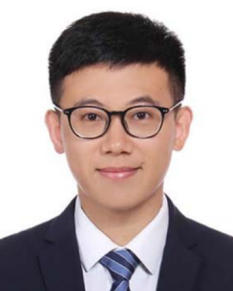
Boyuan Zheng received the B.S., M.S., and Ph.D. degrees in electrical engineering from Harbin Institute of Technology, Harbin, China, in 2015, 2017, and 2022, respectively. From 2021 to 2022, he was a Research Associate with the PEMC Group, University of Nottingham, Nottingham, U.K. He is currently an Associate Professor with the College of Intelligent Systems Science and Engineering, Harbin Engineering University, Harbin. His current research interests include control and optimization of permanent-magnet machines, fault diagnosis and fault-tolerant control in electric drive systems, as well as multiphase/multi-unit motor systems.
Nanyang Technological University
Yanlei Yu (Member, IEEE) received the B.E. degree from Chongqing University, Chongqing, China, in 2016, and the Ph.D. degree in electrical engineering from the Harbin Institute of Technology, Harbin, China, in 2022. From 2020 to 2021, he was with the Sino-Germany Joint Research Project, Karlsruhe Institute of Technology, Karlsruhe, Germany, for one year study. He is currently a Research Fellow with Electrical and Electronic Engineering, Nanyang Technological University, Singapore. His research interests include the design and analysis of high-torque and high-power density machines and drives, novel electrical machines, thermal and cooling system design, and temperature field analysis, especially for high-power electric drive applications, such as heavy-duty electric vehicles, electric aircraft, and eVTOLs.
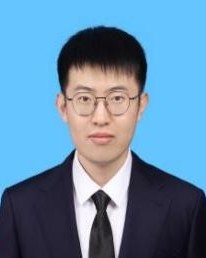
North China Electric Power University
Xu Zhang received the B.S. degree from Harbin Engineering University, Harbin, China, in 2017, and the M.S. and Ph.D. degrees from Harbin Institute of Technology (HIT), Harbin, in 2019 and 2023, respectively, all in electrical engineering. In 2023, he joined the School of Electrical and Electronic Engineering, North China Electric Power University, where he is currently a Lecturer of electrical engineering. His research interests include ac motor drives, wind power system control, model predictive control, and grid connected inverter control. In 2023, Xu Zhang was selected for the National “Postdoctoral Innovative Talent Support Program (Boxin Program)”. Xu Zhang has published over 40 academic papers with an H-factor of 10, of which 20 were published in top journals in the field of electrical engineering. Xu Zhang has presided over seven scientific research projects, including the National Natural Science Foundation of China and the China Postdoctoral Science Foundation.
Permanent magnet (PM) machines are widely adopted in electrified transportation, renewable energy generation, and industrial automation due to their superior efficiency and power density. In recent years, a variety of novel PM machine topologies have been proposed to meet increasingly demanding application requirements, including flux-switching PM machines, vernier PM machines, consequent-pole machines, dual-rotor/dual-stator configurations, and axial-flux designs. While these novel topologies offer significant advantages in torque density and flux-weakening capability, they also introduce unique challenges for sensorless control due to their distinct back-EMF waveforms, complex harmonic spectra, magnetic saliency characteristics, and nonlinear magnetic behavior. Conventional sensorless techniques originally developed for standard interior PM synchronous machines may not be directly applicable, necessitating dedicated sensorless strategies tailored to specific machine topologies.
This special session aims to bridge the gap between novel PM machine design and advanced sensorless drive techniques.
Topics of interest include novel PM machine topologies for high-performance applications, sensorless control strategies for non-sinusoidal and harmonic-rich PM machines, high-frequency signal injection methods for salient and non-salient PM machines, back-EMF-based and observer-based sensorless techniques for novel PM topologies, influence of machine design parameters on sensorless control performance, thermal management and loss analysis of novel PM machines, and power electronics converter design for sensorless PM machine drives. The session brings together researchers from electrical machine design and motor control communities to foster cross-disciplinary exchange on the co-development of next-generation PM machine systems.
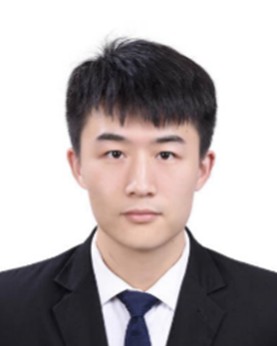
The University of Sheffield
Yang Chen received the B.Eng. degree from Dalian University of Technology, Dalian, China, in 2017, the M.Sc. degree from Xi’an Jiaotong University, Xi’an, China, in 2020, and the Ph.D. degree in electronic and electrical engineering from The University of Sheffield, Sheffield, U.K., in January 2025.
He is currently a Postdoctoral Researcher with The University of Sheffield. His research interests include sensorless control of permanent magnet synchronous machines (PMSM) and power electronics converter design.
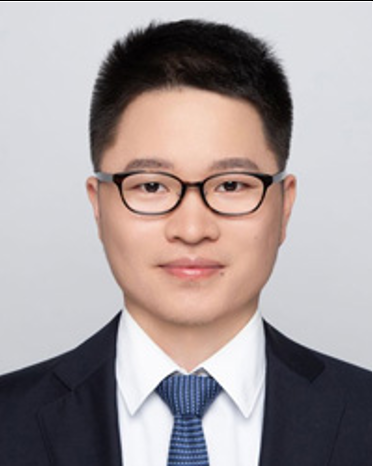
Fudan University
Yu Wang was born in Yancheng, China, in 1991. He received the B.Eng. and M.Sc. degrees from Nanjing University of Aeronautics and Astronautics, Nanjing, China, in 2013 and 2016, respectively, and the Ph.D. degree from the University of Sheffield, Sheffield, U.K., in 2019, all in electrical engineering. From 2019 to 2021, he was with the Sheffield Siemens Gamesa Renewable Energy Research Centre, Sheffield., as a Research Associate. He is currently an associate professor with Fudan University. He is the advisor of IEEE PELS Fudan Student Branch Chapter. His research interests include the analysis and design of novel permanent magnet machines for renewable power generation and energy storage applications
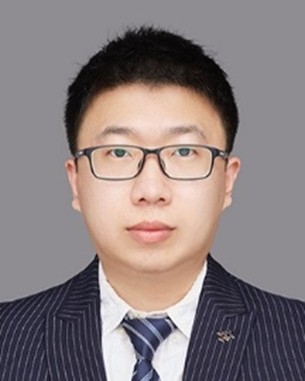
Harbin Institute of Technology
Fangrui Wei was born in December 1993. He received the B.Eng. and M.Sc. degrees in electrical engineering from Harbin Institute of Technology, Harbin, China, in 2016 and 2018, respectively, and the Ph.D. degree from The University of Sheffield, Sheffield, U.K. He is currently an Associate Professor with Harbin Institute of Technology. His current research interests include the design and analysis of permanent magnet machines and thermal management in electric machines.
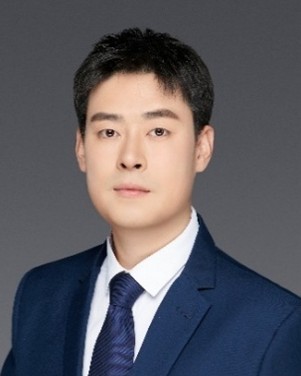
Beijing Institute of Technology
Xiaoyong Sun (Member, IEEE) received the B.Eng., the M.Sc., and the Ph.D. degrees from The University of Sheffield, Sheffield, U.K., in 2016, 2017, and 2021, respectively, all in electrical engineering. Since 2022, he has been with the School of Automation, Beijing Institute of Technology, where he is currently an Assistant Professor. His main research interests include design and control of high-performance electrical machines and drives.
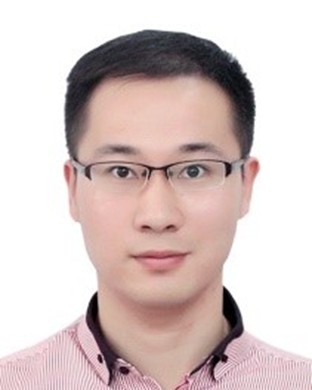
Southeast University
Shangjian Dai (Senior Member, IEEE) received the B.Eng. and M.Sc. degrees from Nanjing University of Aeronautics and Astronautics, Nanjing, China, in 2013 and 2016, respectively, and the Ph.D. degree from the University of Sheffield, Sheffield, U.K., in 2021, all in in electrical engineering. In 2016, he was an e-drive engineer with Ford Motor China Research and Engineering Center, Nanjing, China. From 2020 to 2022, he was a Research Associate in power electronics with the University of Sheffield, Sheffield, U.K. In 2022, he joined the School of Electrical Engineering, Southeast University, Nanjing, China, where he is currently a Professor of Electrical Engineering. His current research interests include advanced control of electrical machine drives, wideband gap inverters, and high-reliability motor drives for electrified transportation and renewable energy.
The rapid advancement of electrified and autonomous systems—including electric vehicles, robotic platforms, unmanned systems, and intelligent infrastructure—has created increasing demand for flexible, efficient, and reliable energy delivery solutions. Wireless power transfer (WPT) has emerged as a key enabling technology to address these challenges by eliminating physical connectors and enhancing adaptability in complex and dynamic environments. Beyond high efficiency, modern WPT systems are required to maintain robust performance under misalignment, variable loads, and uncertain operating conditions. This special session focuses on recent advances in advanced WPT technologies, including innovations in magnetic coupler design, compensation topologies, and high-performance power electronics. It further highlights the integration of intelligent methodologies, such as adaptive control, online parameter identification, and AI-driven optimization, as well as emerging developments in reconfigurable systems, multi-receiver architectures, and coordinated electromagnetic and control design for electrified propulsion and autonomous platforms.
Topics of interest include, but are not limited to, the following:
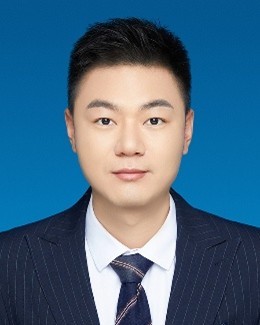
Ben Zhang
City University of Hong Kong
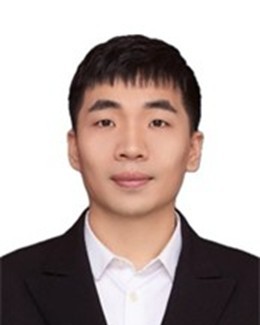
Liping Mo
Hefei University of Technology

Zhijuan Liao
China University of Mining and Technology

Ying Liu
Harbin Institute of Technology
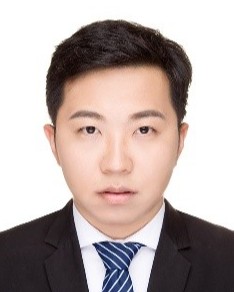
Dong Guo
Harbin Engineering University
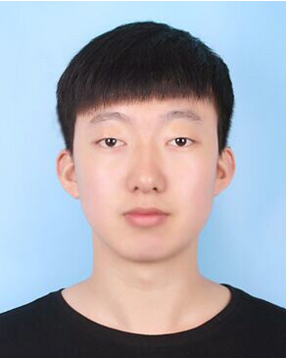
Yunpeng Wei
Harbin Engineering University

1. Sign up and login
All manuscripts for ICEMS 2026 should be submitted through the official online submission system:
https://mc03.manuscriptcentral.com/tems
2. Download template
The One-Page Digest Template is available on both the conference website and the online submission system for digest preparation.
3. Start new submission
Digest must not have been published or submitted for presentation to any meeting before ICEMS 2026.
4. Fill out information
Authors are required to carefully select the appropriate technical track, and indicate their presentation preference (oral or poster) by checking the corresponding boxes on the submission system. The Technical Program Committee, however, reserves the right to make the final decision.
5. Get acknowledge e-mail
Acknowledgment of your submission will be sent to the e-mail address provided by the main author. Please make sure that you receive an e-mail confirmation after making your submission.
6. Acceptance
Digest acceptance will be informed by May 31, 2026.
Digest Submission Deadline (Extended)
May 10, 2026 April 26, 2026
Digest Submission Deadline (Final Extension)